

Tobias Ryan: ‘I dealt with it for ten years—now someone else can have it.’
The minor literature[s] Editor-in-Chief on his new novel GLANTZ


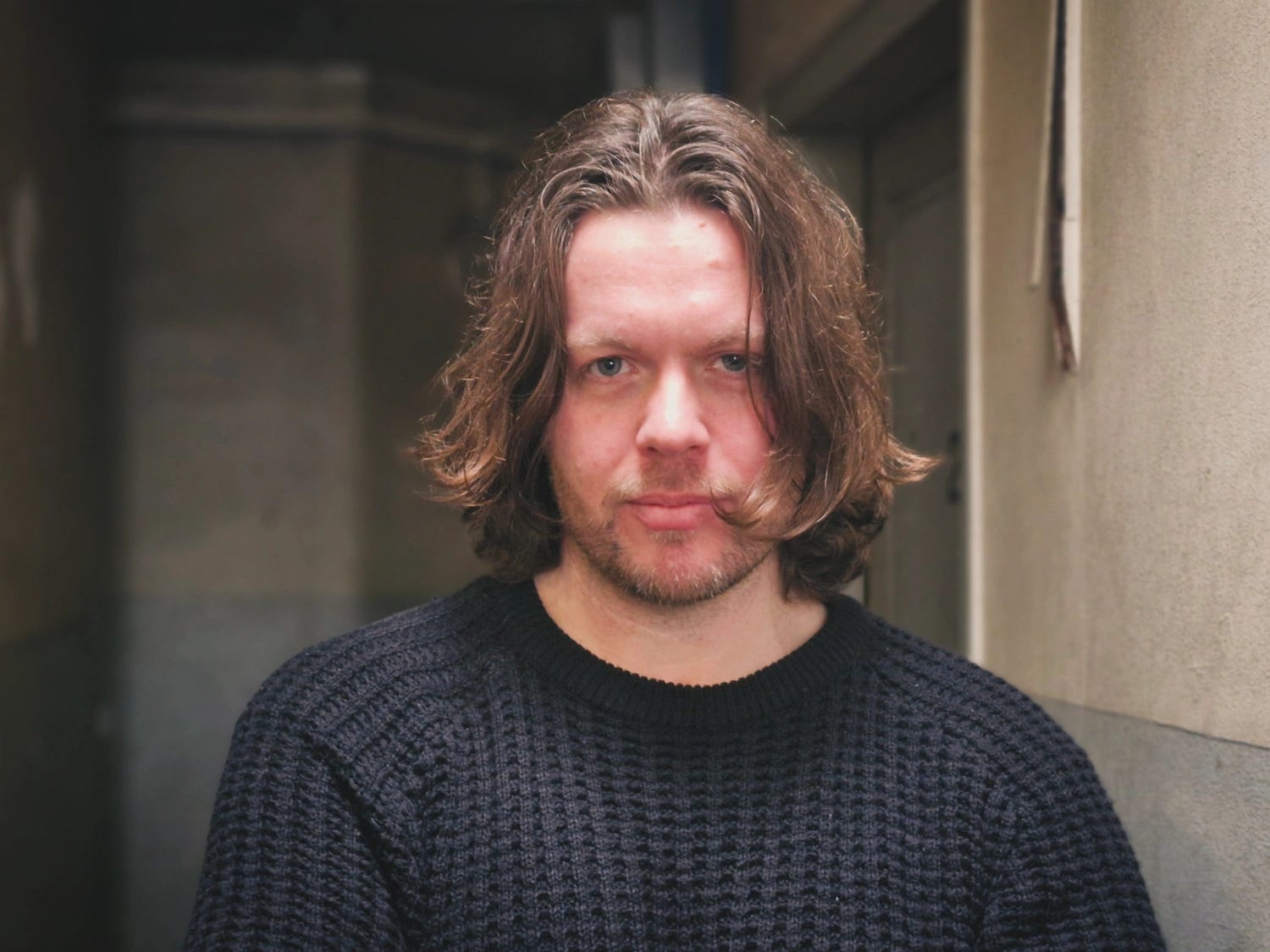
Tobias Ryan wants to gross you out, at least a little bit. In his novel, Glantz, recently published by Equus Press, the eponymous character roams the city, fascinating and disgusting the people that encounter him. ‘You prey on people’, Glantz’s sister says to him. Sometimes, the reader feels like another of his victims. Ryan—who is, along with Yanina Spizzirri, Editor-in-Chief of minor literature[s]—is explicit about his desire to unsettle his readers. We called him at his home in Paris to talk about relatability, intrusion, and a Berlin event to look forward to.
What we’re eating: cassoulet from the tin (TR), kimchi pancake (MM)
Congratulations. Has the book been a long time in the making?
I finished the manuscript in 2023, but this character had been on my mind for a long, long time in different variations, and in different guises. He had appeared there, and was being dealt with, for the better part of a decade. But I would say this version happened relatively quickly, once certain decisions had been made. And once this version was done, he stopped bothering me. That was why there had been so many versions before: he had hung around. But with this one, it felt like the story was done and so it was possible to move on.
Something that quickly becomes clear when you start reading the novel is that it’s written from an unsettling perspective—definitely not Glantz’s, but also not an omniscient, external voice. How would you describe this kind of consciousness?
Any time I’ve successfully completed a manuscript, regardless of whether it’s good or bad, the thing that allows me into it is a very clear sense of who the narrator is. There’s this kind of voice beyond, this external voice which is not my voice as Toby Ryan living in the world—and very often is not a voice from a character. It’s this other, external, thing. I think of it as a voice of literature. It’s a voice which says, ‘this scenario is the scenario of literature’, or, ‘we can make literature from this scenario’.
I’m sure you could say, ‘Well, if you read enough, you develop a fine sense of what a novel could look like, or be like, etc.’ But I’m not super interested in breaking it down in that much detail. I quite like the feeling that it has a mystical element to it, even if I don’t believe it’s mystical (laughs). I would like to say it’s like a thing that [Maurice] Blanchot does. I don’t feel very qualified to say this, but when I read him, I feel this same sense of, ‘This is not a human voice. This is a voice of, or from, literature.’
How do you replicate a feeling in a way that doesn’t seek to make it relatable? How do you enact it instead?
It sounds to me like part of what you’re interested in is a sense that that narrative voice, or that narrative consciousness, resists the reader a little bit.
Yeah, definitely. But maybe that’s a bit of just a reaction against how you sometimes see literature talked about, with this big focus on relatability, on sharing a digestible view of the world. That view of the world might be one that you haven’t experienced before, because it’s coming from a perspective you haven’t known, but the idea is that there is something about it which is integratable. I think an element of estrangement is more satisfying. I like to read a book and be like, ‘Where the fuck has this come from?’
I love Gabrielle Wittkop; I think she’s maybe one of my all-time favorite authors. I met someone who had known her and worked with her, and I expressed that feeling: that when I first read The Necrophiliac, I was kind of like, ‘Jesus, how do you do this? How do you come up with this?’ And this really lovely person was like, ‘Well, you know, she was influenced by X, and she had read Y, and she wanted to do Z…’ (laughs)
For me, there has to be something which is not just the sum total of these identifiable elements. And so writing is the attempt to locate that thing. It’s following the feeling of being always just a little out of your depth, or a little unsure. To sound like a twat, maybe it’s like writing towards something rather than writing from something. That sounds awful (laughs). But there’s that part of it: estrangement, seeking out the estrangement in the writing, seeking out the estrangement in the sensation of relationship. Fundamentally, I don’t understand anything about life or other people. So how do you replicate a feeling in a way that doesn’t seek to make it relatable? How do you enact it instead?
Glantz the character is in fact almost aggressively unrelatable to the average reader: he’s old, he’s gross, he’s possibly a sex pest and at the very least cruel to animals…
Part of my interest with this thing from the beginning was—this sounds gross—intrusion. The idea of being forced into the company of someone who has no redeemable qualities. This thing has intruded into your life, and you have to deal with that now. How you deal with it is going to weigh on you, but not dealing with it will weigh on you more. And I think if there was any mitigation of his relatability or likability, it would give you an out. You would be able to say, ‘Okay, well, I can frame it like this, I can put it in this box. He’s a terrible person, but he had a traumatic childhood’, or whatever way that people can find to justify it. But no, he just exists now, and he’s awful, and now you deal with it. I dealt with it for ten years—now someone else can have it.
He’s also a landlord.
Yes. He is most at ease in places where he shouldn’t be. His perversion is that although he is unable to relate to the people around him, put him in someone else’s bedroom, and he’s suddenly relaxed and just being himself.
And he’s very religious, though not in the way we might like. That aspect of him would be redeeming, at least for your sake, because confession is such a narratological hack. But you foreclose that—we never actually get to hear him confess.
In early attempts at writing a novel, I would always have a scene with a therapist or in a confessional where a character could sit and talk about stuff. It’s a very handy, if blunt, narrative tool. But one of the main impulses behind the whole thing was to figure out how to write a novel where there is zero, or as close to zero, interiority as possible. And that decision affected so much about what happened. Down to the sentence structure: all the would-bes, would-haves. ‘He would have been able to hear it.’ That’s all come from that desire to not give Glantz’s interiority away.
We really only get clues to his interiority from this extremely abundant detail we have about his exteriority…
Part of the importance of him being huge is that he’s so visible. He’s very seen. He would love to be invisible in the world. Hiding in the rocks, just poking his head out. But he’s this fucking huge guy that imposes himself regardless of whether he wants to or not. His visibility is what makes him so disturbing for people. They don’t know who this guy is, but they see him everywhere.
And we end up seeing too much, especially of Glantz’s body. It means that this is a gross book. Glantz is gross. The world around him is gross. Why make art about disgust?
I think people are disgusting (laughs). No. I mean, there is a little dirty part of me that’s got this edgelord stuff in it. I want to push buttons—or rather, to be someone who feels they’re strong enough to confront all that. Daft ego stuff. But then a lot of the more disgusting stuff just arrived as I was writing.
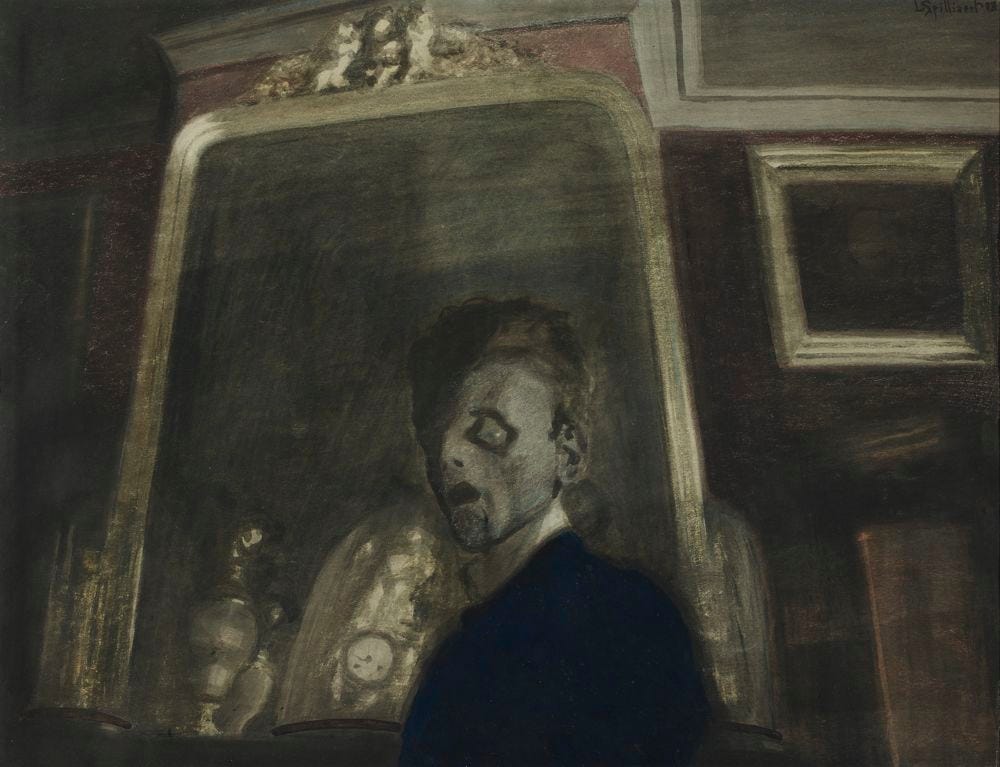
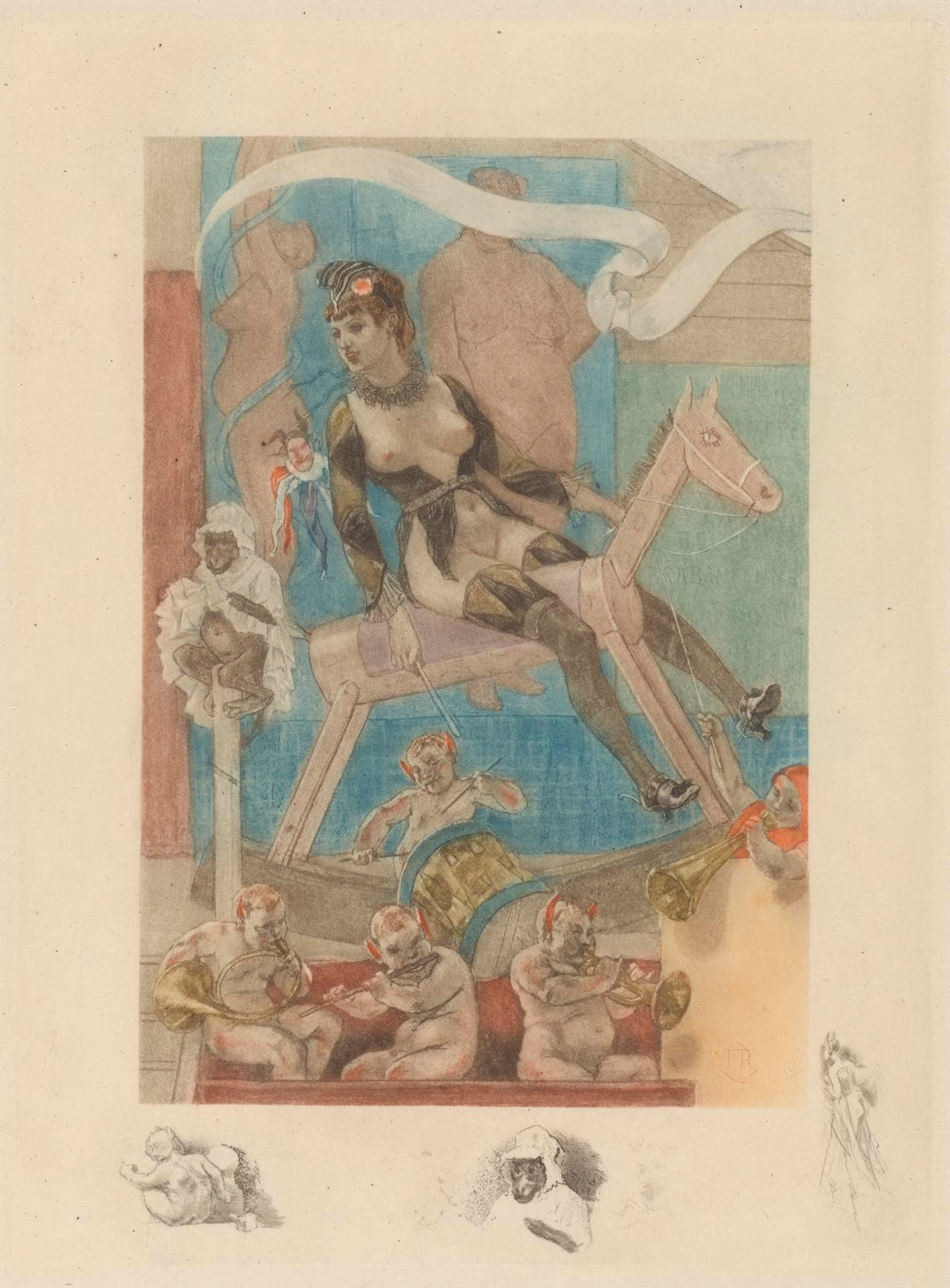
The first emergence of Glantz as a thing in my mind was a long time ago. But it was really over the pandemic, and especially during lockdown, that the thoughts of him started occurring more pressingly. At the time, I was being influenced by fin-de-siècle visual arts: Léon Spilliaert, Odilon Redon, Félicien Rops… That type of decadence was really pressing in on me, going through various degrees of refinement or distillation. So whereas this is a relatively realistic novel, the compost was all this more extreme, disturbing, or perverse visual art. More than any particular writing, I would say.
There’s a frequency to Europe that I missed over there: this historical feeling, this quite dark, shadowy resonance.
I want to talk about the setting, which feels at once very specific but also placeless. Glantz and almost everybody else have Germanic names, but then you refer to ‘arrondissements’, then they’re eating English breakfasts and speaking to each other in quite British cadences. What sort of place, or non-place, or half-place is this?
For me, it was very important, or very desirable, that it felt like a European book. All my life, the idea of a European intelligentsia—of someone like a Beckett—was always very aspirational. For instance, there’s a series of novels, ‘The Kingdom’, by the Portuguese writer Gonçalo M. Tavares. He’s writing in Lisbon, but when you read them, it’s just a European city. We recognize it’s European from the atmosphere and all the signifiers, but it is undefined by precise cultural references. And that was something that I aspired to. There was an earlier draft of this book where it was more intentionally not Paris. It was just a dilapidated post-colonial European capital. But I wasn’t committed to developing a fantasy city, so…
I live in a very grand apartment building. The apartments cost millions, but I’m in the attic in this dinky little hole. These substrata of experiences in the city, the presence of poverty, especially in comparison… Well, it’s a very European experience, I think. I had an experience years ago living in Chile, where I found that I missed Europe, but I didn’t really know what that meant. There’s a frequency to Europe that I missed over there: this historical feeling, this quite dark, shadowy resonance. Those fin-de-siècle artworks have that. The word in French is glaque: a kind of sleazy, grimy darkness.
Yeah. One of the things that I quite like about European cities—many, not all—is that sort of post-colonial, ‘our brightest days are behind us’ feeling.
Well, that’s exactly it. ‘Best days are behind us’ is one way to put it, but ‘the rot has set in’ is the other. It’s also… I wasn’t thinking this at the time, but so much of this is a pandemic book, a lockdown book. We had a curfew here, where nothing was open except supermarkets. No restaurants, no cafés. So there was this very heavy sense of being in the place where you wanted to live your life, but it’s not here anymore. There are police around who will pull you up. I have the fortune to live in a place where that was not too pressing, but if you were living in poorer neighborhoods, or in the banlieues, they weren’t fucking around. As is the structure of these places in Europe, and in France especially.
There was this definite sense that the best days are behind, the rot’s set in, there’s repression occurring. Something is being enforced, something that is anti-life, anti-community, anti-sociability, anti-solidarity… And that’s just France, I think. It’s gotten worse since the book was written. The world opened up, post-COVID, but repressive tactics are never far away. Everything to do with Palestine and the protests. There’s an LGBT+ bookshop, Violette and Co., that has been attacked multiple times by right-wing thugs. This week [on 19 January], the police arrived to search for copies of a pro-Palestine children’s coloring book. So, it’s under the surface, but not far under the surface. And I think that’s the post-empire, post-whatever, post-post society that we’re in.
The quote-unquote nationality of the book was unsettled in its language as much as its setting. If I can quote you to you, there’s a sentence that I highlighted in the prologue.
He stoops leaning, peering into the middle of his hands, searching, perhaps, from habit, maybe, orienting himself towards some barely scrutable unknown, in perhaps, a prayer, slipping and wished, drawn or poured, spilt there. whose presence, nonetheless, he is invested; some form, perhaps, some expression, cupped there, his breath now also held there, a mutter perhaps, a prayer, slipping in wish, drawn or poured, spilt there.
Which is a wonderful sentence that feels quite French to me in its rhythm and its mode. Was that an intentional effect, or do you think it follows on from your reading, your life in Paris, your life in French?
It’s partly a combination of all those things. Taste, influence… But I’ve also been here a long time. Fourteen years now, this year. And although I was always or mostly reading in English for the majority of that, I was also separate from everything that was going on in the UK and Ireland. I had a decent ten years of just being left to my own devices, and I think that the payoff of that is that feeling exists of having unclear origins.
The other part of it is that, for me, writing is a transcription of something that I’m hearing. It’s not me. It’s just how this voice speaks to me. It’s so wanky (laughs), it’s ridiculous, but that’s what the thing was saying. I don’t think it would take a huge amount of effort to be like, ‘Okay, well, you read this, and you read this, and you read this, and you triangulate, and blah blah blah.’ But I was never very interested in doing that kind of excavation work. I’m just happy to consume a lot of stuff: I’m going to digest it, and stuff’s going to come out. It’s all just going to be in there.
Do you feel like your work with minor literature[s] affected the language or shape of the novel?
Getting involved with writing people has been really great. Like I said, I had ten years of just doing my own thing, so obviously it’s a huge benefit to be mixing with people, seeing stuff that I wouldn’t have seen if I hadn’t been involved with it. In terms of actual writing influence… Not to be a prick, but just being on the receiving end of submissions is very instructive, to see why things work and why things don’t work. The difference between reading a submission where you feel like the voice is strong, and when it’s not, it’s a very indefinable quality, but you know it immediately. So that’s clarifying.
Do you guys have anything exciting coming up?
Always. We’ve just announced that we’re adding a music and sound section, which will be run by the composer and musicologist Max Ardito, who’s here in Paris. That’s really exciting, just because it opens up a whole new range of possibilities for what we can do.
And then in late September, we’re hoping to come to Berlin. We did ‘Minor Incident’ in Paris in 2024, and the goal is to have these Minor Incident events all over. Our next target is Berlin. In Paris, our topic was the avant-garde. Finding a topic for Berlin is still under discussion, but we’ve been thinking about the topic of contemporary bohemianism. Berlin would be an interesting place to talk about that, because it’s been so famous-slash-infamously the place where that had been happening for a solid… twenty years, I guess?
I mean, it depends on who you ask (laughs).
The goal would be to have some readings and have a panel with people who know the place, and who can give us a perspective on it, and possible futures. So a bit tentative, but this can serve as the official announcement of a minor literature[s] event in late September in Berlin.
 | A guest post by
|