
Kate McNaughton: 'Herta Müller reminds us that writers are on the front line.'
The novelist on her new translation of the Romanian-born Nobel Prize winner—and the limits of beauty as resistance


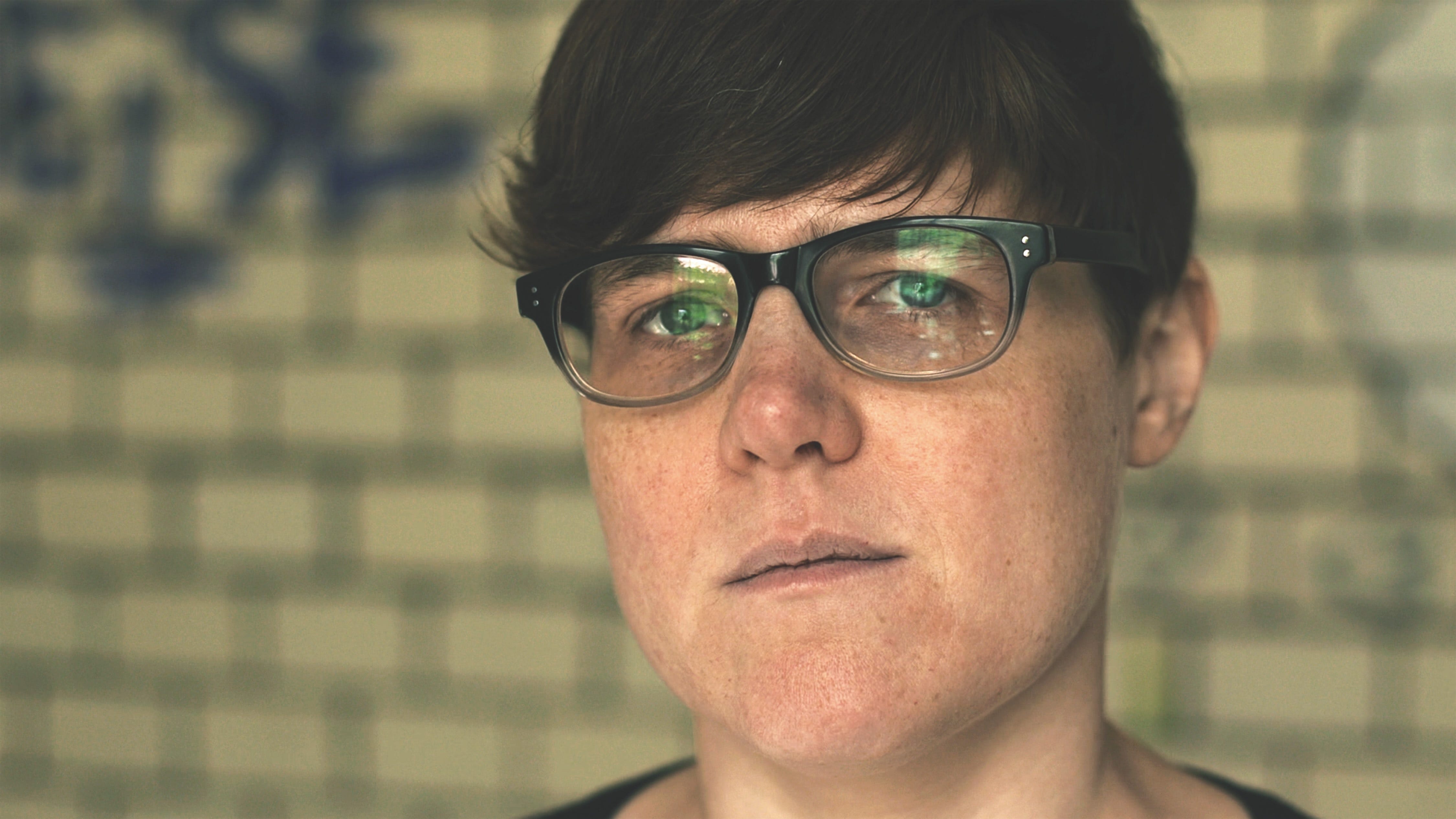
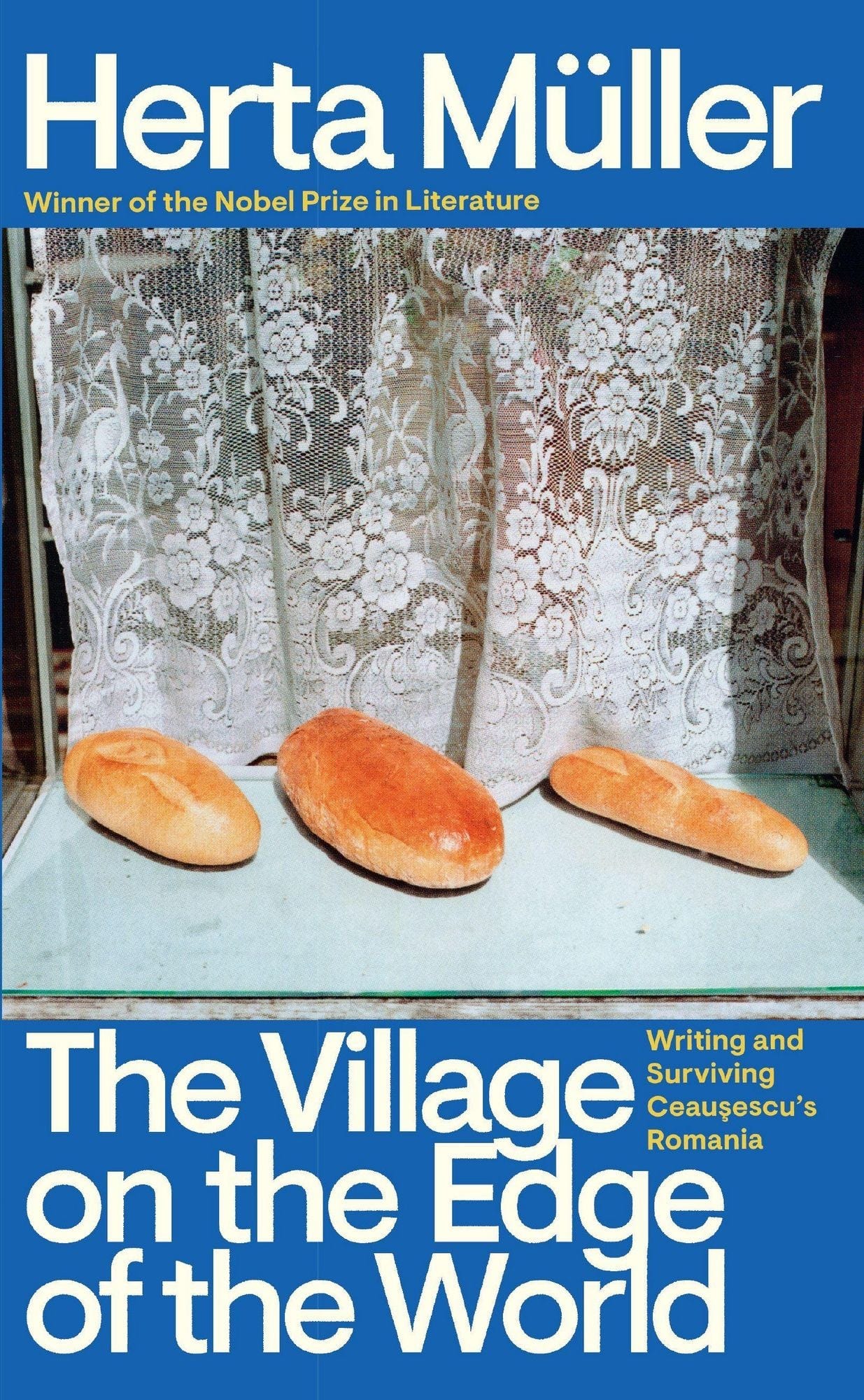
The first thing we end up talking about when Kate McNaughton walks into the empty Goldberg’s Deli in the northern part of our shared Bezirk is the dire state of the world—for everyone but also for people, who like McNaughton, are working with words. McNaughton is a novelist and translator, a fixture in the English-language Berlin scene. She’s lived in the city since 2012 and published her first novel, How I Lose You, in 2018. She’s currently working on another. McNaughton has long translated from German for the theatre but The Village at the End of the World (Granta Editions) by the Romanian-German writer Herta Müller marks her first book-length literary translation. Composed of interviews between Müller and her editor, it presents itself as a kind of early autobiography of the Nobel Prize-winning writer, reflecting on her life in Romania through her arrival in Germany. It is a book full of strange events and details, provoking McNaughton to wonder ‘how did that happen?’—what she names as ‘a sense of a life that's heightened by literature.’ Persevering through the scattered outbursts of my young son, we spoke about Müller’s idea of beauty, the distance between Communist Romania and our capitalist reality, and the task of translating the writer in the wake of her virulent declarations since October 7.
Kate will be holding a launch for The Village on the Edge of the World at Lettrétage (Veteranenstr. 21) on June 17 at 7:30pm, in conversation with Auflauf editor Alexander Wells. Entry is free; more information here.
What we’re drinking: Flat white with oat milk (SIB), Chai latte (KM)
What’s the story behind your coming to translate this particular book?
It’s a bit prosaic, I’m afraid. I’ve been writing reader reports for Granta for ages and ages, about 15 years. This was one of those. I really liked it; I thought it was really interesting. I wrote a report that was very positive and said, ‘Well, if you do buy it, could you consider me for the translation?’ They asked me to do the sample, and then the whole book. It’s a book that is both a good introduction to her and, for people who have read her novels in the English-speaking world, a good way of providing some context and going deeper into them. There’s a lot of stuff in here that isn’t necessarily available already in English. They’re also reissuing two of her novels to coincide with the publication of this, so I guess they’re trying to put her out there again.
Do you think there is something about Herta Müller that speaks to our particular moment?
When I was translating it, I felt like, ‘Oh, my God, she’s so relevant,’ in a way that I hadn’t necessarily anticipated. Even the context of my getting the job illustrates this. I have an office in on Mariannenplatz, which I share with other translators. It was June 2024, and I was in the middle of talking to a colleague who’d come to a summer party we were having. We were discussing, ‘Oh, God, everything is so awful for translators at the moment.’ And she was like, ‘I’ve been thinking about retraining as a therapist.’ And I went: ‘I’ve also been thinking [of doing that]!’ And then I was like, ‘Hang on a second. I haven’t turned off my computer. Let me just go and do that, and then we can continue our conversation about what our new career paths might be.’ I go and try to switch off the computer, and there’s the email from Granta offering me the job. And so I thought, ‘Maybe it’s a sign from the gods that literary translation is still worth doing.’
A lot of the work was done under the cloud of the release of ChatGPT and what that might mean for everything. And then the editing process, with a lot of back and forth coincided with the beginning of the second Trump administration, and Elon Musk DOGE-ing around with his chainsaw. What she writes about language, and the way the [Romanian] regime used language to try and control people—and how language was, for her, also a way of surviving this oppression—felt very relevant to our present day.
[Müller] talks at one point about the language of the regime being a language of prefabricated parts—that the ugliness of the way people expressed themselves was a way of dulling people into submission. She talks about ugliness generally, and she’s like, ‘the buildings are ugly and the shop windows are ugly, and the language is ugly as well.’ It’s like AI slop, right? It’s a surge of poor quality stuff that washes over us and beats us into submission. And she talks as well about words being twisted. How someone throws themselves out of a window and it’s an accident—or a member of the party commits suicide, and it’s a hunting accident. When you look at the alt-right on Twitter and this twisting of words and turning them round 180 degrees… There are a lot of interesting parallels there. Our digital world is a structure of surveillance that Ceaușescu could only have imagined in his wet dreams. We have a machine that is meant to control our language in a way that he could only have dreamt of—and yet we’re willingly handing over both our data and our very ability to formulate our own thoughts to that. There’s a cautionary tale in there.
The other side is that she talks about how finding ways to express her own experience is what kept her sane and able to survive the oppression she experienced—the very beauty of language and the unexpectedness of a poetic phrase coming into being. Maybe I’m too obsessed with AI, but again, going back to this thing of what’s happening with this virtual world… She has this almost haptic sense of language. To the extent that she’s now, in her most recent poetry, literally cutting out words. It’s almost as though words are actual things that have their own existence to her. I think you feel that through the way she talks about them: that they have their own being, that you try and hold on to one and grasp it and then put it down onto the page. And I think that’s a really interesting counterpoint to the world that we live in, where everything is virtual. We live in a terrible world, and it’s easy to feel like, ‘what can I do about it? What’s the point of being a writer when everything is [so terrible]?’ But she reminds us that writers are on the front line when an oppressive system is being put into place. She reminds us that words are important, and that they can be a way of surviving oppression just as much as they can be a way of structuring oppression.
I was struck by how Müller thinks about beauty as a kind of act of resistance to the regime—such that even putting on makeup before going to be interrogated is a kind of radical act—and I thought of it as a marker of how different our world is than what she experienced in Communist Romania. We live in a world where the idea, or ideal, of beauty is so often coopted to sell us something, or control our mode of expression. Is Müller’s invocation of beauty some ideal beyond the cosmetic, or is there a way in which it might not work today as it did for her?
There’s a passage [in the book] where she talks about going to Germany for the first time. She’s at this dinner, and there’s the tablecloth and the beauty of a lovely dinner in a fine restaurant. And you’re like, ‘well, that’s, of course, a beautiful and amazing experience.’ But also it’s not the reality of the West that everyone has access to the nice dinner in the fine restaurant, right? There’s a passage as well where she talks about—I can’t remember exactly—cotton buds, or something like that. Anyway, a particular item is available in the shops, in the West, that would have been an exceptional luxury [in Romania]. I guess it’s quite a Jamesian theme as well, isn’t it: do you need wealth to have beauty? There’s a particular kind of beauty that is attached to a certain kind of exclusivity, to which I think she probably is partial.
To read this book was, for me, to feel an incredible estrangement from her experience, to see how—
Alien the reality is? For sure. My partner is East German. He was 9 when the Wall came down, but his parents are very much [East German]. There was a lot in here that I found quite enlightening, although his mother also read the book, and I think that she was a bit offended. Because they were part of the system; they weren’t dissidents. So I also had that perspective in mind, which is maybe why, with the restaurant thing, I was like: it’s not that simple. Of course, it’s nice living in the West if you can afford those things, but there are also a lot of people who can’t. No one would want Ceaușescu’s regime—but there was, in East Germany, an attempt to have a more egalitarian approach. Even so, her idea of aesthetics being important is something that we can draw on. Maybe it’s a question of just not pushing it to extremes: it’s nice to take care of your appearance, if that’s what gives you confidence, but you shouldn’t be forced to inject yourself with Botox every six months when you’re 24 or whatever.
She also applies that to language. [For her,] beauty is truth, truth beauty. Beauty is a way for us to connect to something, to some greater truth. As I was saying, I do feel it is relevant today: because in this digital world that we inhabit, you’re assailed by ugliness, by this poor quality, whether it’s poor quality texts or poor quality images. But I agree with you. The world she’s describing is completely alien, right? It’s not the reality that those of us who’ve grown up in the West have come from. But maybe that’s also an argument to read her, because she’s still alive. She must [only] be around 70 now. That reality is not that far away.
Yes, Müller really emphasizes how the regime lives on. There’s this incredible scene, where Müller waits behind her old interrogator to buy eggs after the end of the regime—and confronts him, but realizes that she uses the formal tone to speak to him, just as she had during her interrogations. What was it like translating a book from a writer so attuned to language?
The text itself is a sort of in an interesting form, because it is an interview. So it’s spoken language, but she is still so attentive to what is being said. And because she’s referring to text that she’s written, there’s still that very close attention to every single word, and a very careful choice of words. It’s not like me mouthing off right now. I think she’s someone who structures her thoughts much more carefully.
One thing that was a big question for me was [her German]. Because she’s from a German-speaking minority in Romania, her German has a slightly other sound to it. It’s very hard to pinpoint what it is exactly because, obviously, she’s a native German speaker, but it has a slightly different music than what you hear here in Germany. How do you convey that slightly different and slightly other sound, that foreign-sounding musicality, in English? I think I’m still a bit like, ‘have I actually done this successfully’? I’m not sure. My initial approach was to say, ‘I’m going to stick a bit closer to the original structure of the German than I maybe would if I were translating a different kind of text, in order for it to, slightly, retain a hint of that otherness.’ But then obviously, I’m still trying to smooth it enough that it doesn’t read clunky or like it’s a bad, purely literal translation. So a lot of the editing process as well was back and forth. where the thought often was, ‘okay, is this a bit where things should be smoothed over?’ Because sometimes she just has a very weird use of a particular word. For example, she’ll use a word that just wouldn’t be the word that you would use in ‘German German.’ I think I have a lot of notes in the document with track changes and comments and stuff with the editor where he would be like, ‘this sounds a bit odd. Should we use this [instead]?’ And I’d be like, ‘Well, no, because it also sounds odd in the German, so I think actually here we have to sort of keep that oddness.’ But then in other places, it didn’t. So it was a fine balancing act.
Another thing that she does—which again, was quite hard to deal with—is that she uses repetition a lot. She’ll use a word and then sort of circle round and round it in a way which I think is… I mean, you also notice it in the German, but it’s more acceptable in German than it is in English. So those are also moments where you’re like, how much of the repetition do we leave in? At what point does it become unreadable? It was quite a balancing act. It would be different with another writer, but she has a very poetic view of the world and of language, so she zeroes in on these individual words. This is also what makes her a very interesting writer in German, because she’s really obsessed with nouns. And German is a language where the noun is king. It gets a capital letter, you can stick them together and make new nouns endlessly. There’s an infinite number of new nouns. It’s the essence of the language, which obviously is not the case in English, right? Nouns are important in English, but they don’t have that kind of nature. And nouns are her thing—as we were saying earlier, they’re almost like things that you can grab.
As you were translating this, did you reckon with Herta Müller’s public profile since October 7? Was this something you had to consider in some way?
I have to say, I actually wasn’t aware of what she’d been saying when I started working on this. That isn’t to excuse the things that she said, because I absolutely disagree with them. Generally, the discourse on Gaza in Germany is kind of insane at the moment, but I suppose maybe it is something that I think is worth engaging with, in her case. The tone with which she says those things is so shocking because it’s so bitter. But it’s a bitterness that you find here [in this text], like when she’s talking about the old Nazis in her village, or, like the stooges of the regime. This isn’t to excuse her position, which I find unacceptable, but I see trauma there. Her whipping around on this issue is connected to a history of suffering—her parents having been sent to camps, and this sort of feeling that ‘there are all these old Nazis around’.
So I think it’s something that is worth attending to, because I think that those dynamics are at play in our discussions too. I don’t know what the answer is, because it’s very hard to… But I guess that maybe that’s also part of the point. It’s easy for me, sitting here, having grown up in fairly privileged circumstances and not having experienced anything like that, to take the moral high ground. But I think that there’s a complexity to the path that takes her to this position now, and it has to do with the particular historical experiences that she’s been through. Like the scene in the restaurant: you can see certain reactions that are, on the one hand, completely understandable, given where she’s coming from, but that you could also critique from another perspective. Like, if you’re taking a Marxist perspective, you could talk about the class dynamics that are underneath that restaurant scene. I feel that the virulence with which she talks about Gaza, it’s got to be connected to something else—because otherwise it’s just insane. It’s something I obviously find problematic, but I don’t think that it’s a reason not to read her work or engage with her seriously as a writer. Maybe I’m excusing the inexcusable, but I feel like it’s also important to understand how that happens, because so much of the discourse today on Gaza comes from people who are motivated by that kind of historical trauma in one way or another.
It’s certainly a document that allows us to understand where that intensity is coming from. There’s a lot here that, for lack of a better term, exposes Müller, in interesting ways—politically and artistically. So, are you working on anything right now?
I’m actually co-translating a collection of Austrian short pieces at the moment. And I’m pretty much finished with my second novel—which has taken a very long time to write—but I have a final, final round of small edits that my agent has asked me to do.
Can you divulge what the novel is about?
I can tell you in very general terms: it deals with how people come to do bad things to each other and justify it to themselves. My working title now is This Cannot Be Happening. But my previous working title for it was Banality, because of the banality of evil. Basically, it is about what happens in people’s heads when they’re doing things that harm others.
 | A guest post by
|